

Villains are vital for most stories. But sometimes they hide in plain sight, fooling everyone into believing they can be trusted until, finally, at a key moment, their villainous nature is revealed! In these dramatic scenes, the newly discovered villain does not merely state their evil plans: Everything about them is changed. This article explores the cinematic tools and the acting choices, such as the voice, that are used to effectively communicate a rapid change in morality to the audience.
The cinematic world is full of villains, and they come in all shapes and sizes. Some villains are indisputably Villains with a capital V from the moment they show up on the big screen: Dark Vader’s first appearance in Star Wars: A New Hope (1977) has him striding across a number of lifeless bodies, clad entirely in black with his face hidden behind his soon-to-be iconic mask, filmed from a low angle while a dramatic and sinister background music plays, disturbed only by his laboured and unnatural sounding breathing. Clearly, the audience is meant to instantly identify Darth Vader as a dangerous villain. Only later, in Star Wars: The Empire Strikes Back (1980), when Darth Vader is revealed to be Anakin Skywalker, is his position as the ultimate bad guy softened and provided with more complexity. This alteration to his position is as shocking and effective as it is, precisely because he was previously so easy to recognise and categorise as a villain.
The instant villain who is later revealed to possess some redeeming qualities and/or a tragic backstory is not rare (Professor Snape from the Harry Potter series arguably fits within this category), but the reverse type of villain is even more common: From Frozen’s (2013) Hans to Harry Potter and the Philosopher’s Stone’s (2001) Quirrell and Loomis in Scream (1996), films and television are full of characters who pose as one of the good guys, interacting with and seemingly helping the protagonists, only to later be revealed as the mastermind behind the evil forces all along.
Expecting to be deceived
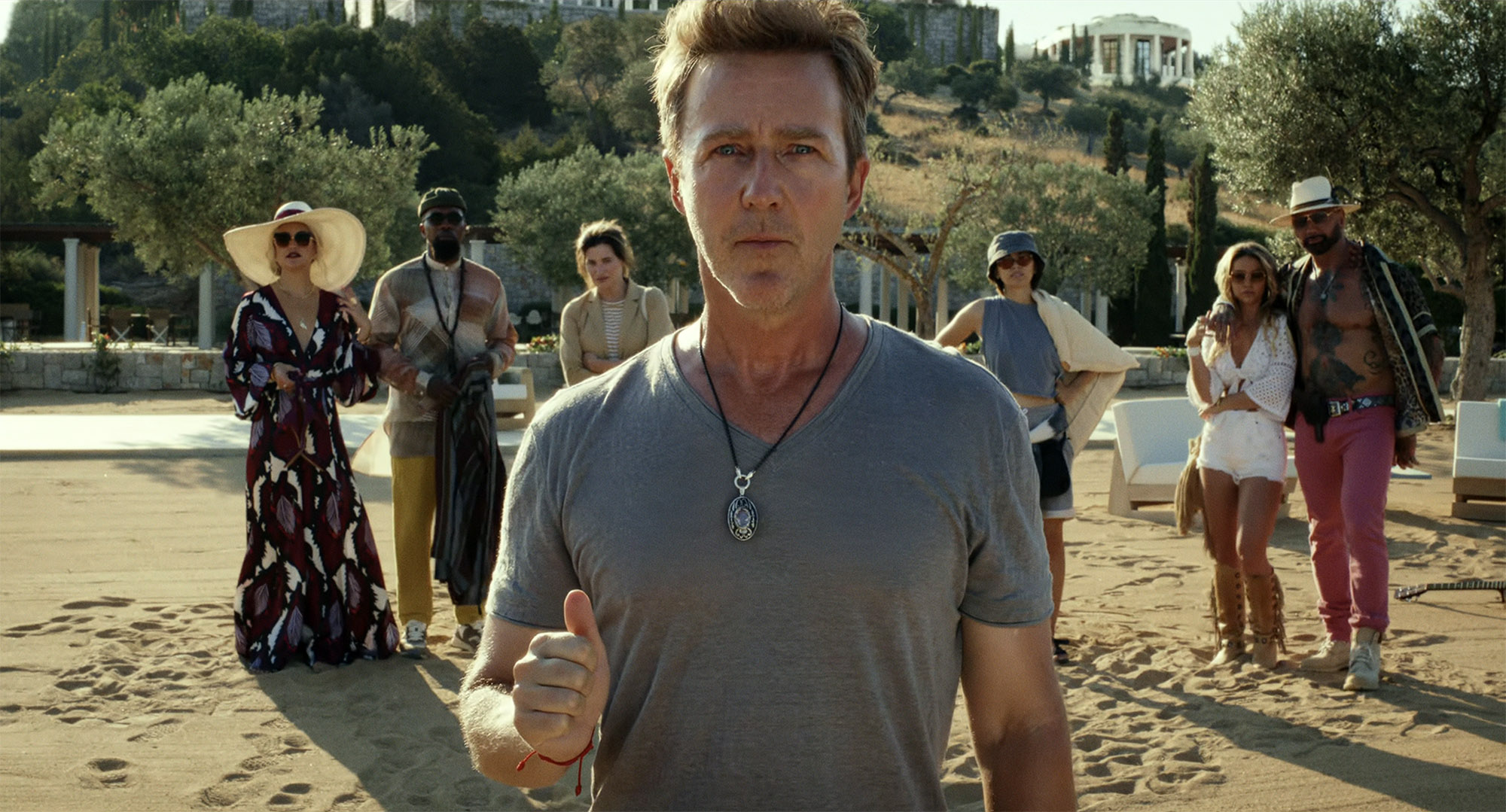
A few genres hinge on this deception and actively engage and attract their audiences by continuously having them guess at who is not what they seem. The whodunit mystery is a prime example of a genre that relies on the identity of the villain (in this case, usually a killer) being obscured for most of the narrative. Whodunit audiences are expecting to be deceived and are therefore suspicious of all characters throughout the narrative until the killer is finally revealed. These suspicions are actively encouraged by the creators: Close to all characters in a murder mystery will be shown to have either motive, means, and/or opportunity to be the killer.
In murder mysteries, such as Glass Onion: A Knives Out Mystery (2022), the audience navigates through a vast number of explicitly suspicious characters to find the true villain (Figure 1). In genres where a hidden villain is optional rather than a requirement, audiences are genuinely surprised by a hitherto unsuspicious character being suddenly revealed as a villain (Figure 1).
When the audience is not expecting to be deceived about the morality of a character, the reveal itself is a surprise (rather than just who tricked the audience and the other characters). In these cases, it is usually utilised that “a character’s voice, like its visual appearance, can be made to mislead audiences or other characters about its actual moral outlook” (Kjeldgaard-Christiansen et al. 2025, 23), so that, during the reveal, the character’s voice and/or visual appearance change to reflect the character’s actual moral outlook.
A cuddly creature and looming, red-eyed bugs
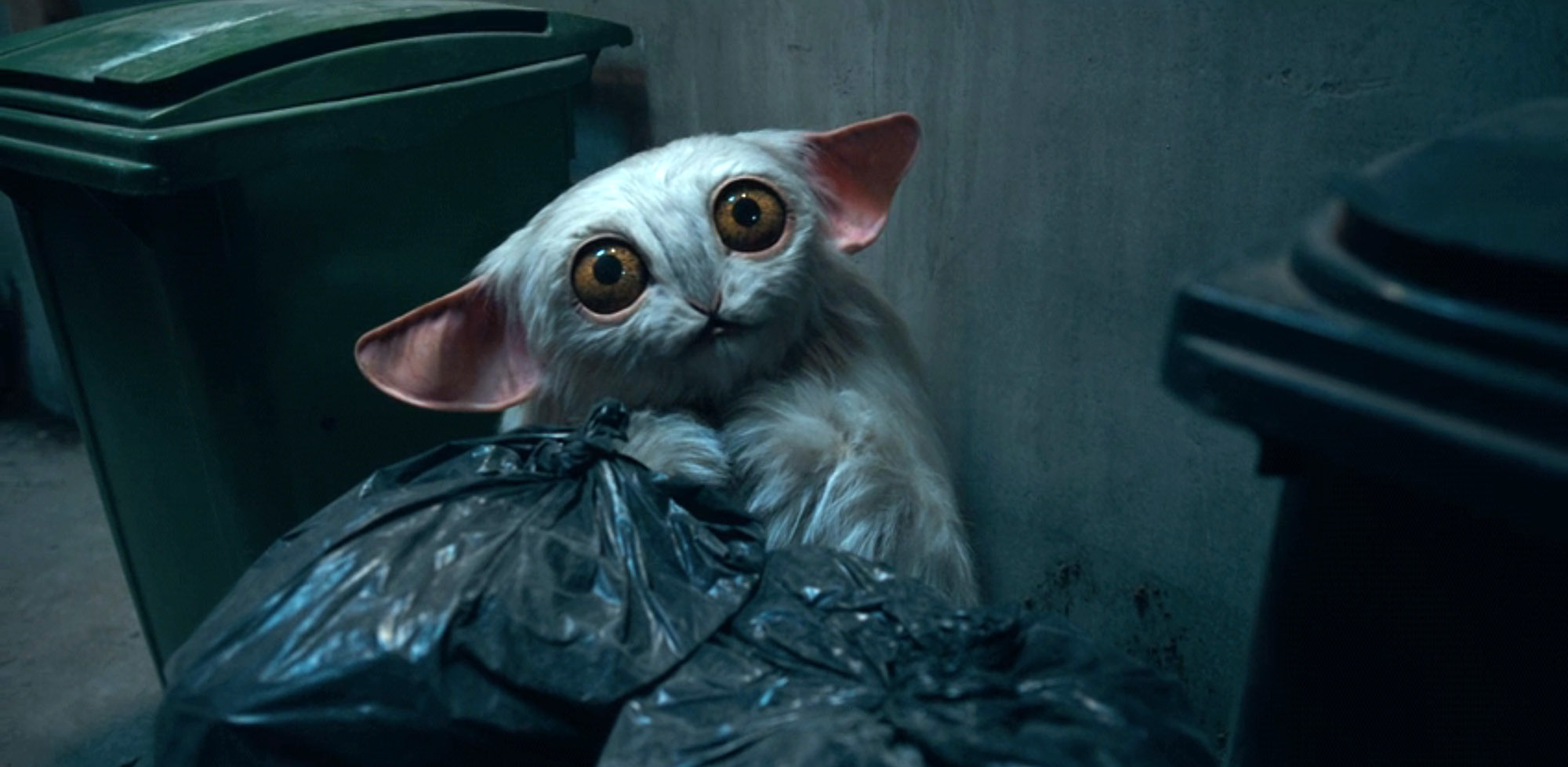
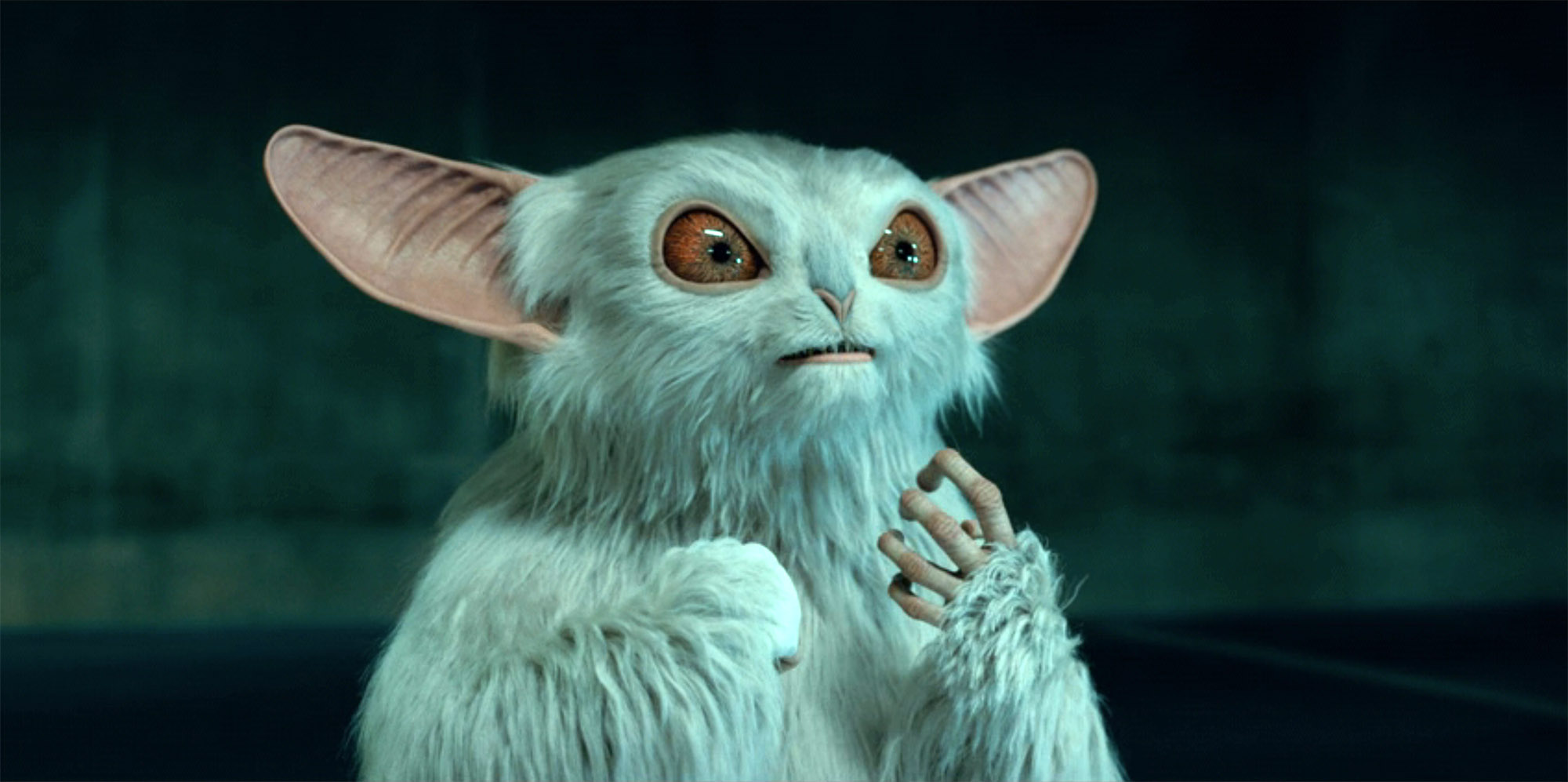
In the 60th anniversary episode Doctor Who: The Star Beast (2023), female protagonist Rose Noble hears a strange noise and goes to investigate. The background music builds for a dramatic moment, but as soon as a white fuzzy creature the size of a big dog with big eyes, a huddled posture, and a meek, high-pitched voice is revealed, the music cuts out, signalling a false alarm (Figure. 2). The creature, introducing itself as The Meep, is hurt and explains that it is being hunted by the Wrath Warriors who want to kill it, describing them as “monsters”.
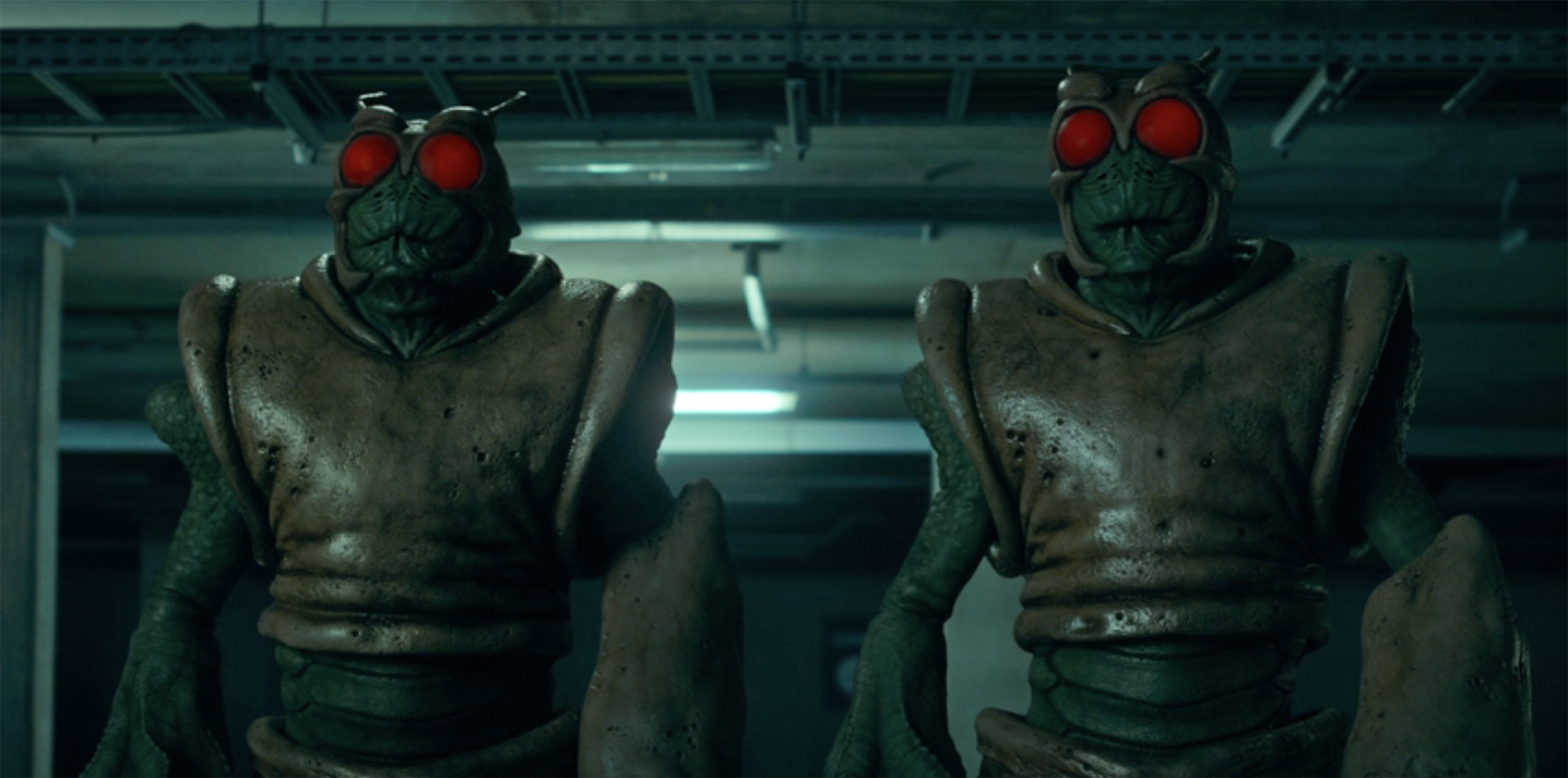
The antagonistic status of the Wrath Warriors is solidified in the very next scene: A lone kid notices a threatening shadow, and, in a fast cut sequence, looks up to see a space gun pointed directly at him, a scary looking arm that ends in a biting mouth with pointy teeth, and finally a pair of glowing red eyes set in a bug-like head atop a towering figure, filmed from a low angle with non-human growling sounds accompanying the visuals. In an extremely low-pitched voice one Wrath Warrior instructs another to leave the kid be, as it is the Meep they seek.
Meanwhile, the Meep is invited into the home of the protagonists, always maintaining its huddled posture and high-pitched scared voice. The creature is continuously shot at eye level or from a slightly higher angle. Even when the Meep is accidentally poked in the eye, nothing but surprise and pain can be detected.
Well-spoken aliens and an evil laugh
Following a dramatic escape from the Wrath Warriors, the Doctor stages a trial between the Meep and the Wrath Warriors, having observed that no damage or injury has been inflicted by the Wrath Warriors. Asking about the guns carried by the Wrath Warriors, they are, for the first time, given a lengthier speaking role: While still green, tall, and imposing with bug-like red eyes, they speak with a higher pitch than suggested by their sizes, have a somewhat breathy voice quality, and the content of their speech is pro-social, thoughtful, and informative, even from their very first line: “The guns apply a mild and harmless neural anaesthetic. For the record my name is Sergeant Zogroth” (Figure 3). It is an immense change from their previous short bursts of speech, and can, from the perspective of treating the story as a logically coherent entity, be explained by linguistic variation naturally existing among Wrath Warriors, like among humans (Knudsen 2026). Even so, the juxtaposition between the Wrath Warriors’ frightening exterior and their newly revealed polite and seemingly well-educated speech makes the audience and the other characters doubt their prior conviction of the Wrath Warriors as scrupulous and evil. Instead, the Meep quickly steps into the role of villain.
When the Wrath Warriors reveal that the Meep is an intergalactic war criminal seeking the destruction of all other species, the Meep’s voice and visual appearance change: Its eyes turn from orange to red with furrowed brows, its posture changes to reveal claw-like hands and a mouthful of pointy teeth, and its voice turns hoarser, more assertive, and with a new minimum pitch, audible lower than before (Figure 4). Happily swearing, it kills the Wrath Warriors with no hesitation or remorse while laughing a stereotypical ‘evil laugh’ (Kjeldgaard‐Christiansen 2018).
A subtle change in camera angle accompanies the other changes: the Meep is now seen in a low angle shot with the camera placed slightly below eye line. This lower camera angle is used for the Meep for the rest of the episode, sometimes changing to an even more extreme low angle. Likewise, the new threatening appearance and low, hoarse voice of the Meep remain throughout the episode, confirming the evil nature of the creature.
Introducing a villain – and his hidden alter egos
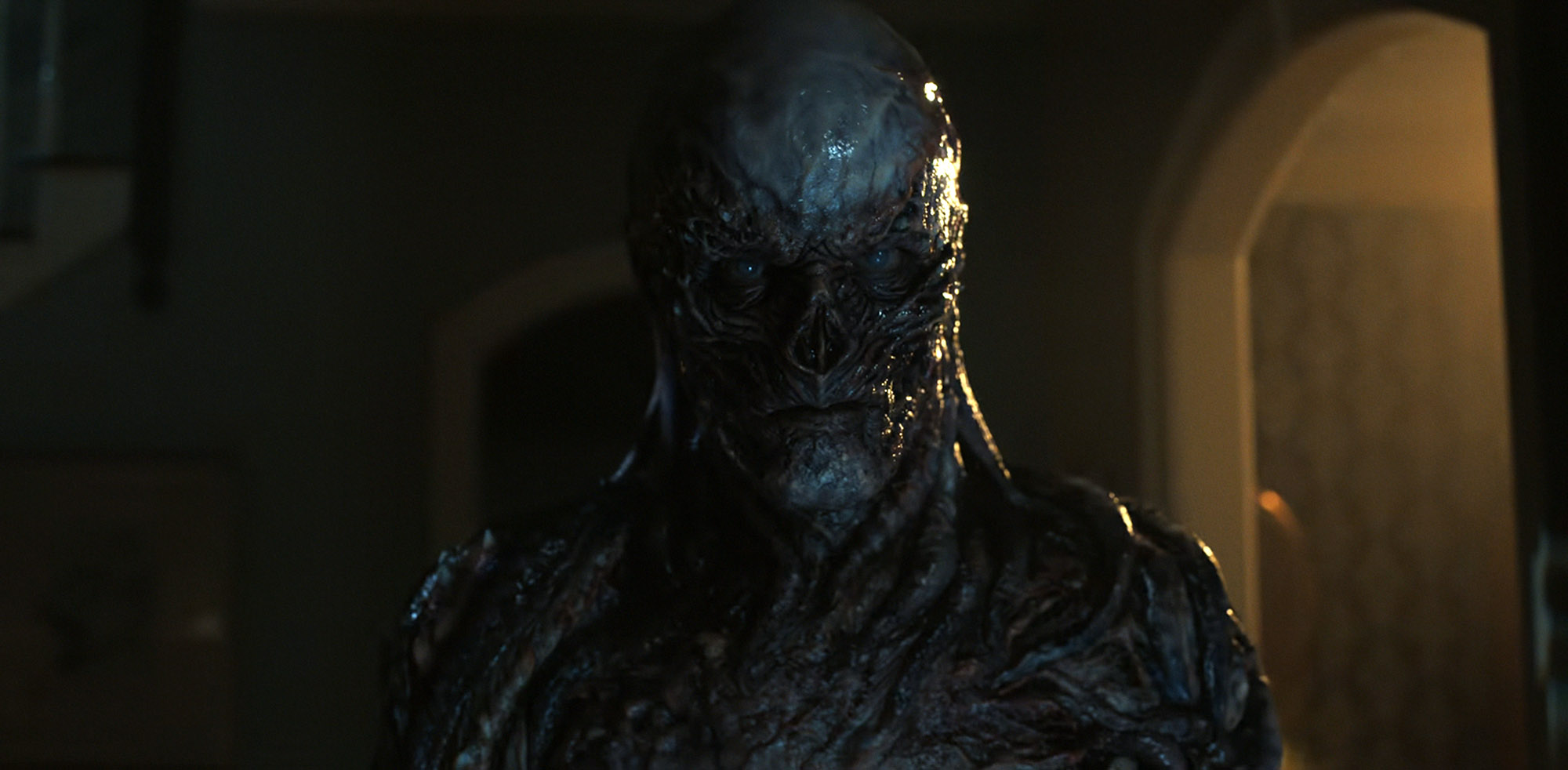
Henry Creel. A friendly orderly. One. Vecna. The main villain in Stranger Things season 4 (2022) has many names and many appearances, but they are not initially recognised as belonging to the same person. The main villain known as Vecna is introduced in the first episode when he kills a young woman by supernatural means. His voice is deep and distorted, his breathing almost a growl. Emerging from the dark, his skin glistens as if the outermost layer of skin has been removed, revealing the moisture within, while root-like veins snake across his back and up his neck (Figure 5). A stereotypically monstrous villain, he is immediately recognisable as dangerous and even evokes the same sense of disgust as is often associated with zombies (Clasen 2012, 2017).
Meanwhile, Henry Creel, the child, is introduced in Episode 4 through a retelling of past events by his father. He is described as a sensitive kid, and in the shots accompanying the story, he is delegated to the background or shot out-of-focus with no dialogue. Episode 5 introduces a young orderly from Eleven’s past, later to be revealed as test subject One. Neither Henry Creel nor One are recognised as villains when they are first introduced. They are not associated with each other, far less considered as the same person as Vecna until the end of the seventh episode when their murderous rampages are shown, and One is banished into another dimension to be physically transformed into Vecna. However, even before this final transformation into an obviously villainous form, One is portrayed differently depending on how much Eleven, and by extension the audience, trusts him.
From scary stranger to trusted confidant
In a series of flashbacks, Eleven explores forgotten experiences from her time at the secret research facility Hawkins Lab. In the first one, she moves through the research facility, observing the other test subject children, before being greeted by a young orderly clad entirely in white with golden blond hair. Clearly disturbed by the flashback, Eleven tries to escape, only for the interaction to replay. The man’s voice is friendly and soft, but the overall situation conveys unease: The background music is tense and eerie, and the light flickers dramatically during a close-up of the young man, briefly casting his face in shadows at the exact time he smiles a little smile that might be perceived as friendly, but in the situation borders on creepy. As the situation replays, the young man’s voice becomes more and more distorted, an effect of post-production rather than the actor changing his speech productions. Neither the audience nor Eleven trusts the situation or the orderly, and the cinematic effects have been chosen to ensure this effect.
Once Eleven discovers she is travelling through an old memory, much of the unease conveyed through the background music and voice distortions disappears, and the interaction with the young man is allowed to play out: No longer briefly cast in darkness, his voice remains soft and friendly with a relatively high pitch, not uncommon for addressing a child (Saint-Georges et al. 2013). When Eleven asks if she is in trouble, his pitch lowers while ensuring her that is not the case, fitting with the seriousness of the conversation (Boyd and Hejná 2025).
Throughout the next many flashbacks, Eleven and the orderly become friends. In some flashbacks, he is delegated to the background, merely following the order of the doctor referred to as “Papa” by the children. When he plays a bigger role, he is usually centred in the frame and shot in a close-up with lightning casting little to no shadows on his face (Figure 6).
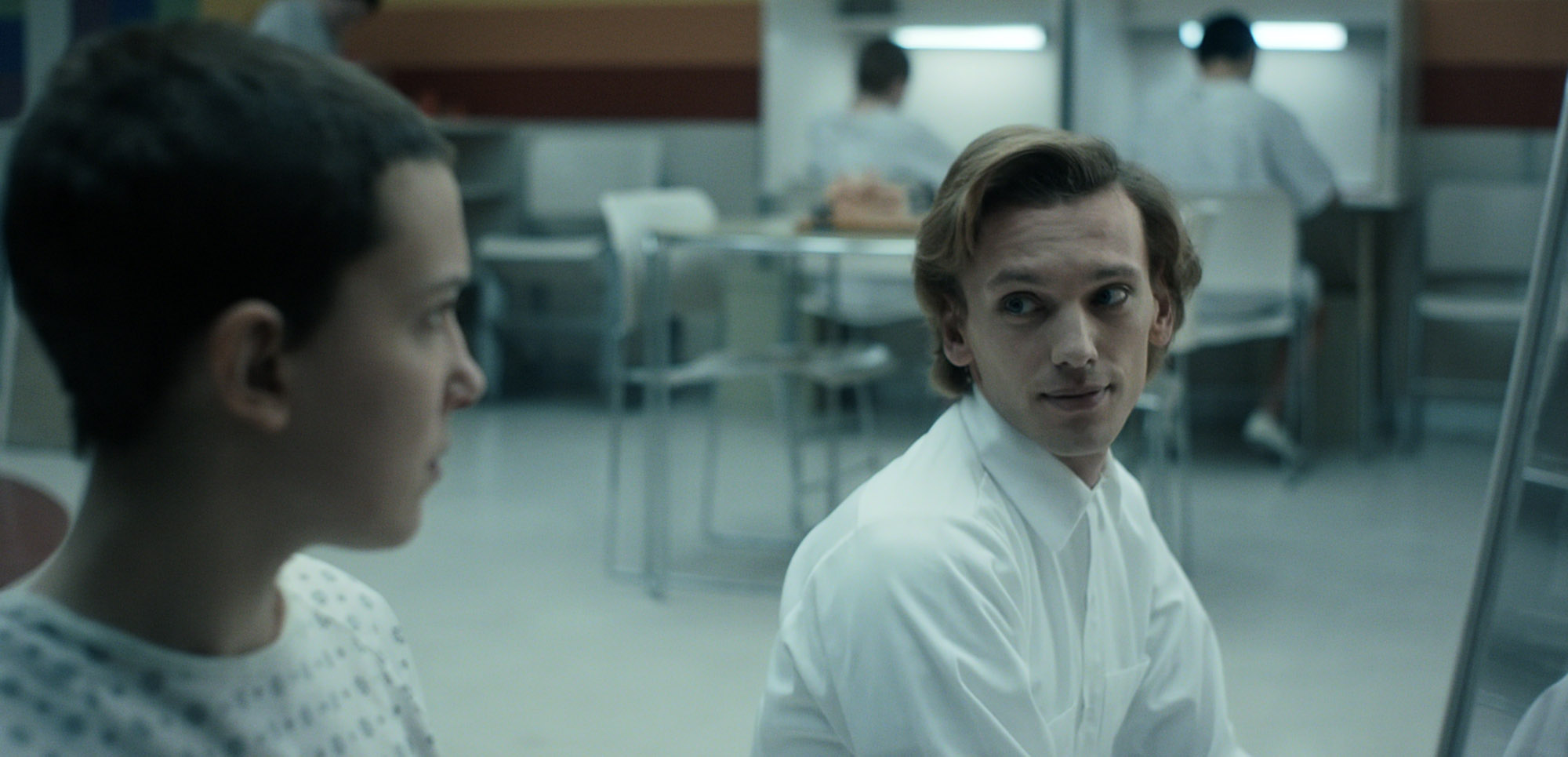
His expression is open and his pitch changes dynamically between natural lower pitch levels, which makes him sound grounded, experienced, and confident and higher pitched words and sentences that connote friendliness and attempts of lightening the mood (Ranganath, Jurafsky, and McFarland 2013; Boyd and Hejná 2025; Kjeldgaard-Christiansen et al. 2025). Overall, his voice is soft, welcoming, and friendly. At key points whispers or a lower pitch are utilised, clearly with the communicative purpose of building connection by highlighting the seriousness or secrecy of some of the topics. Meanwhile, he usually looks earnestly at Eleven with eyes wide open as if he has nothing to hide, but simply wishes to help her as best as he can. The choices regarding voice, facial expressions, and cinematic tools let the audience infer that the orderly can be trusted.
At times, the background music still conveys unease, but the timing of the music and their previous knowledge of the narrative alongside the framings, cuts, and tone of voice, allow the audience to deduce that the unease is not due to the orderly, but rather the subject of their conversations: Papa and how he cannot be trusted.
Subtle warning signs
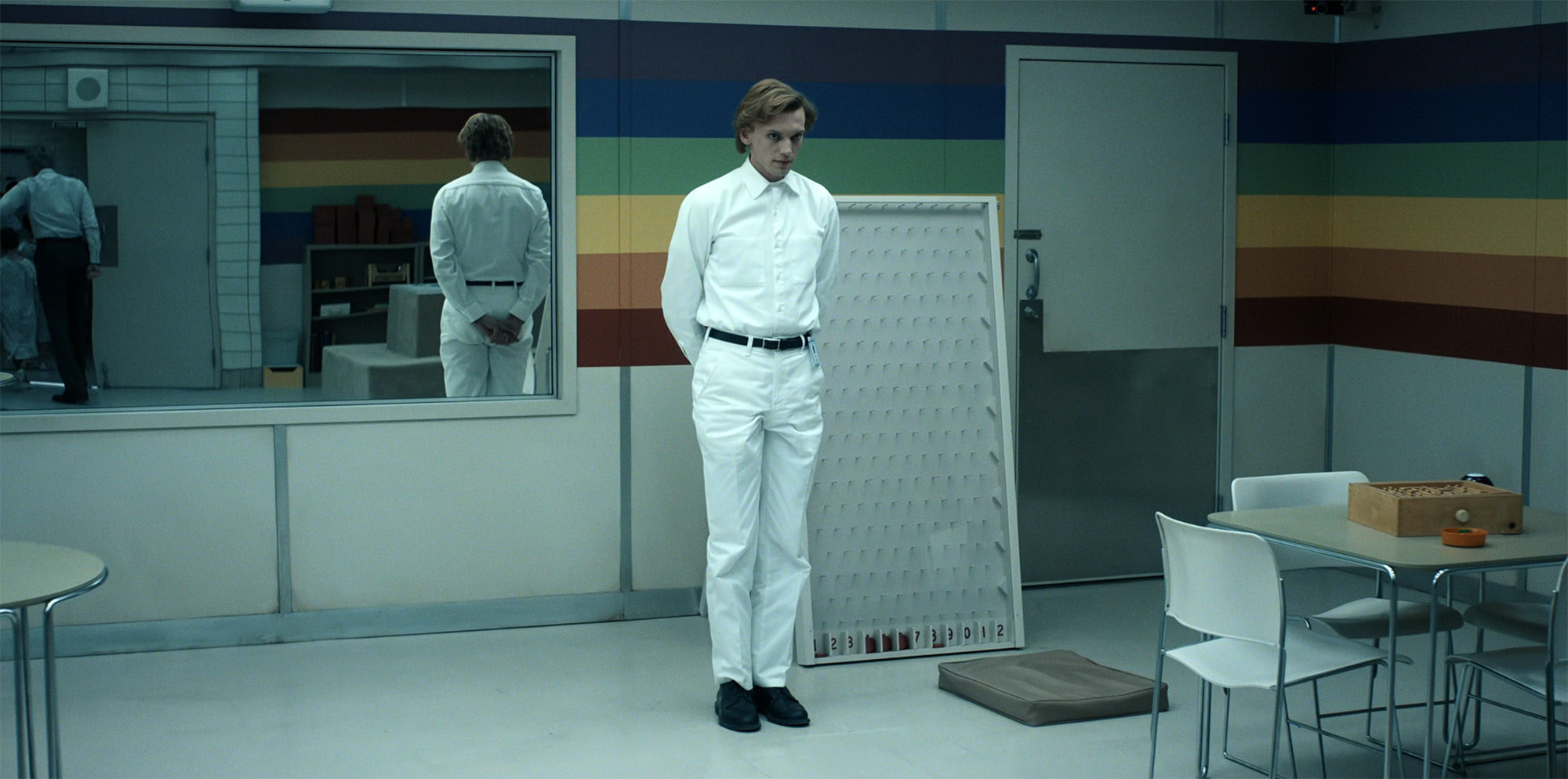
After the initial discomfort of the first flashback, few moments foreshadow that the orderly is not as trustworthy as he claims. After warning Eleven about Papa, Papa himself enters the room, and the orderly stands at attention, out of focus in the background of the shot with a passive, but friendly expression. Only when Eleven has left the room, does a slight camera move show the, now unnervingly unsmiling, young man simultaneously in the room and in a mirror (Figure 7). Showing a character’s reflection in a mirror often indicates a hidden dual nature or a secret, here providing a subtle indication that the orderly may not be who he claims to be (Spotlight on Film 2018).
Later, having presented Eleven with a means to escape but explaining that he cannot go with her due to a tracking implant, Eleven offers to remove the implant and uses her powers to rip the implant from the orderly’s neck. Striding over to examine the bloody pill-sized object, the young man’s initial “huh” is extremely low pitched and the usual softness of his voice has been replaced by a hoarser quality in his next line. In an extreme close-up, the focus shifts from the bloody imprint in the foreground to the young man’s face as he is holding it up. He is shot from a very slightly, almost unnoticeably low angle with his head tilted down, so he looks up through his eyebrows, and the visible shape of his eyes are slightly triangular, not unlike the shape of the evil Meep’s eyes. For a short moment, he looks and sounds almost menacing, dangerous. However, as soon as he turns to face Eleven to thank her, he is once again shot straight on, his eyes are big, round, and friendly, and his voice has regained its softness.
Shortly after, the orderly reveals his telekinetic powers in a fighting sequence shot to mirror Eleven’s fights from previous seasons. The young man looks concentrated, almost angry, and is filmed from slightly low angles. Often, this might indicate that he is dangerous, but within this specific narrative, it highlights his power and similarity to Eleven. Their similarities are further enforced when the orderly reveals himself as Papa’s first test subject, One, using his usual friendly voice and a dynamic pitch.
A helper turned killer
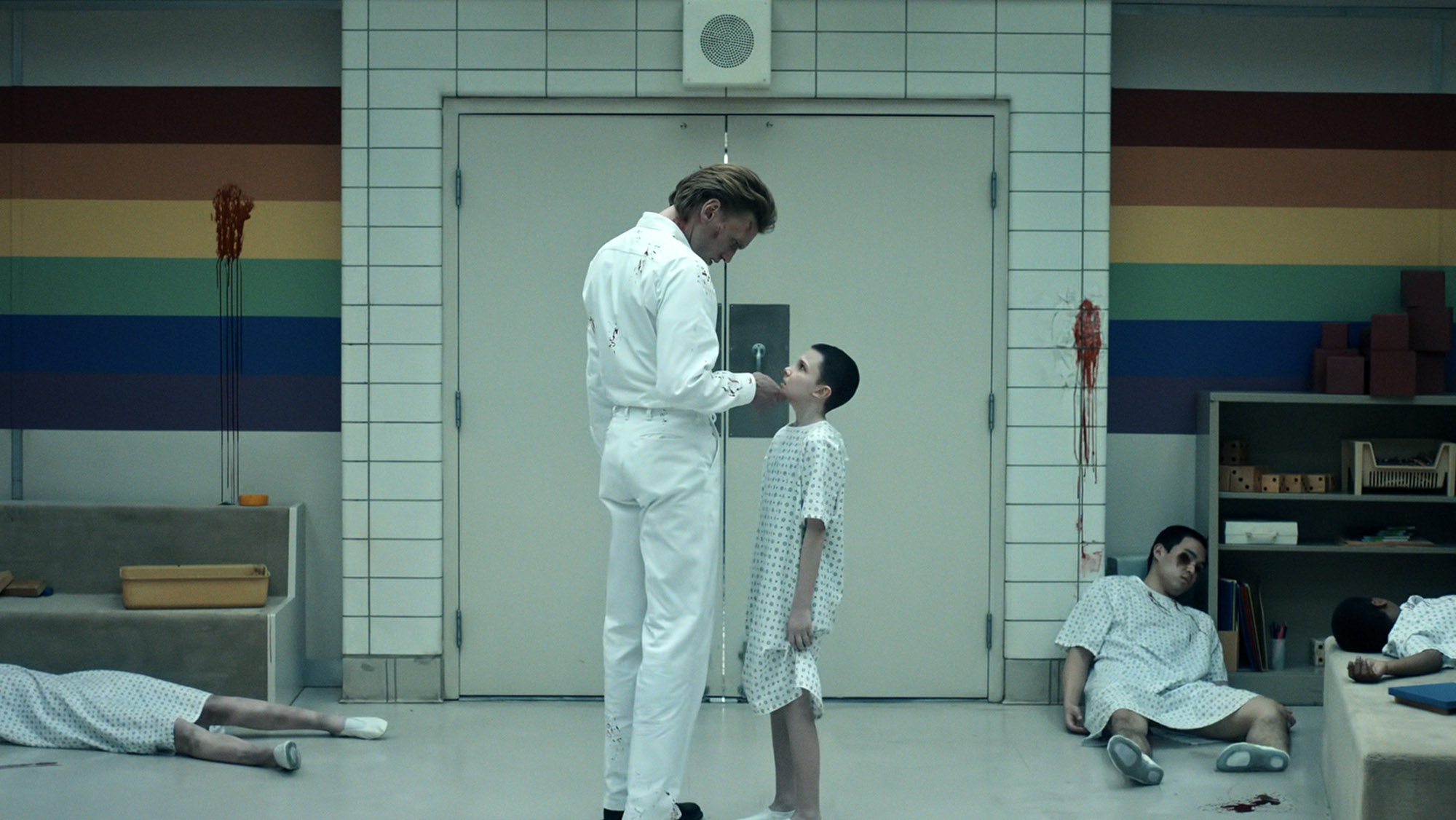
Only during the very last sequence of episode 7 is the full truth about the orderly revealed. Having followed a trail of blood and bodies, Eleven discovers One as the source of the destruction (Figure 8). Except for the first shot, angled at the eye level of his victim, pinned to the wall, One is shot almost exclusively from a low angle and/or in extreme close-ups, showing him in control and as dangerously unavoidable.
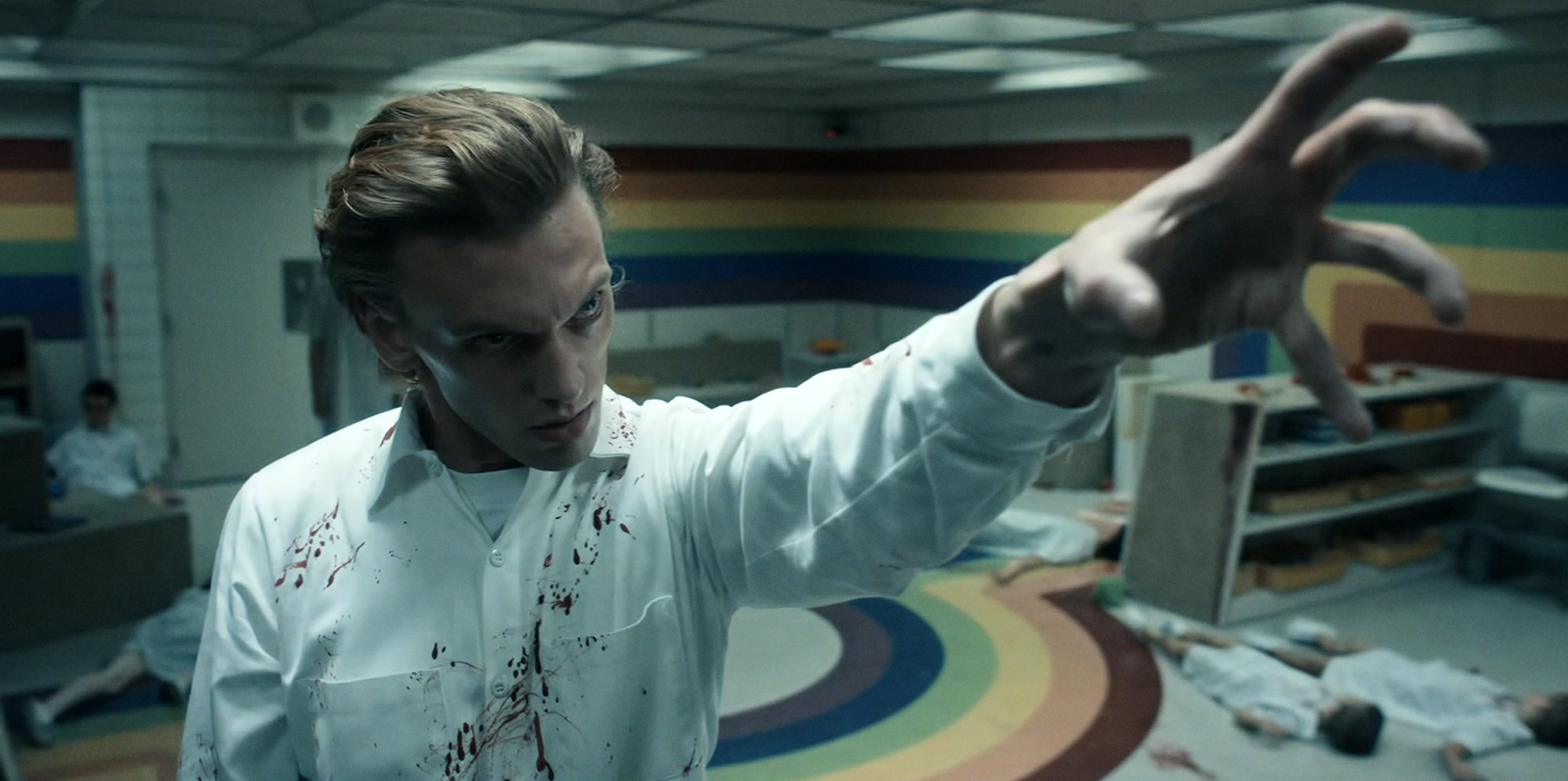
Physical changes mark this new One: His hair is pulled back, his eyes bloodshot with black circles underneath, and veins almost pulsing on his now exposed forehead. His voice is darker, with a lower pitch and creakier than before until he starts to tell his origin story.
At first in his origin story, One’s voice takes on almost the same softness as before, though not consistently; in between the softness, creaks, whispers, and hoarseness are incorporated, and as the story progresses, and his asocial tendencies become clear, his voice becomes even creakier and lower pitched, before taking on a softer quality as he tries to recruit Eleven to his course.
The man in this scene is nothing like the young man who guided Eleven: Everything from demeanor, facial expression, voice, background music and camera angles has changed, letting the audience understand that, like Eleven, they were taken in by an act. Even the brief moments where his voice and face soften only highlight the danger: One has no remorse, sees nothing wrong with his actions, and is just as content with killing Eleven as recruiting her.
A common toolbox
These examples of villains hiding as protagonists highlight certain key tools that are used for quickly changing the audience’s perception of a now evil character: The background music changes, becoming more sinister; the camera moves to show the character from below, even if only slightly so; the character’s facial expression changes, becoming angrier and more frightening; and the pitch of the voice is dropped and often takes on a hoarser quality.
Considering other characters who masquerade as good guys before being revealed as villains, the importance of these elements is reinforced. In Frozen, Hans’s voice becomes less dynamic and lower pitched when he refuses to save Anna with a true love’s kiss, and in subsequent frames in the scene he is shown slightly from below eye level. When he returns to the other characters, he also returns to his masquerade as a good guy – and his voice likewise returns to its previous sound.
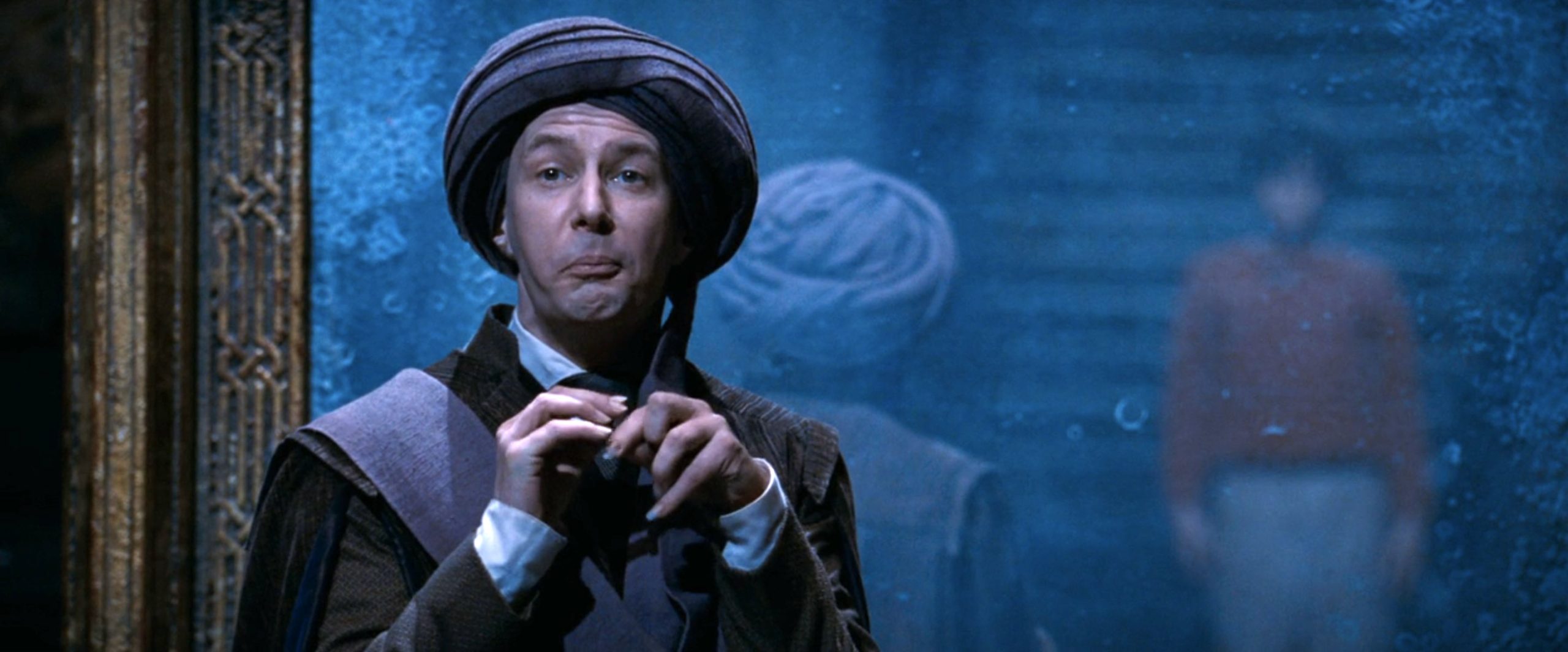
The importance of the voice is explicitly referenced in Harry Potter and the Philosopher’s Stone. Quirrell, with Voldemort hidden on the back of his head, has been stuttering the entire school year, but when Harry discovers him at the movie’s climax, his voice is perfectly even. Gone are also the relatively high-pitched elements that have previously marked his speech. The changes are especially noticeable as Quirrell himself refers to his previous voice by donning it once more while asking who would possibly suspect a man who sounds like that to be nefariously associated with Voldemort? (Figure 9).
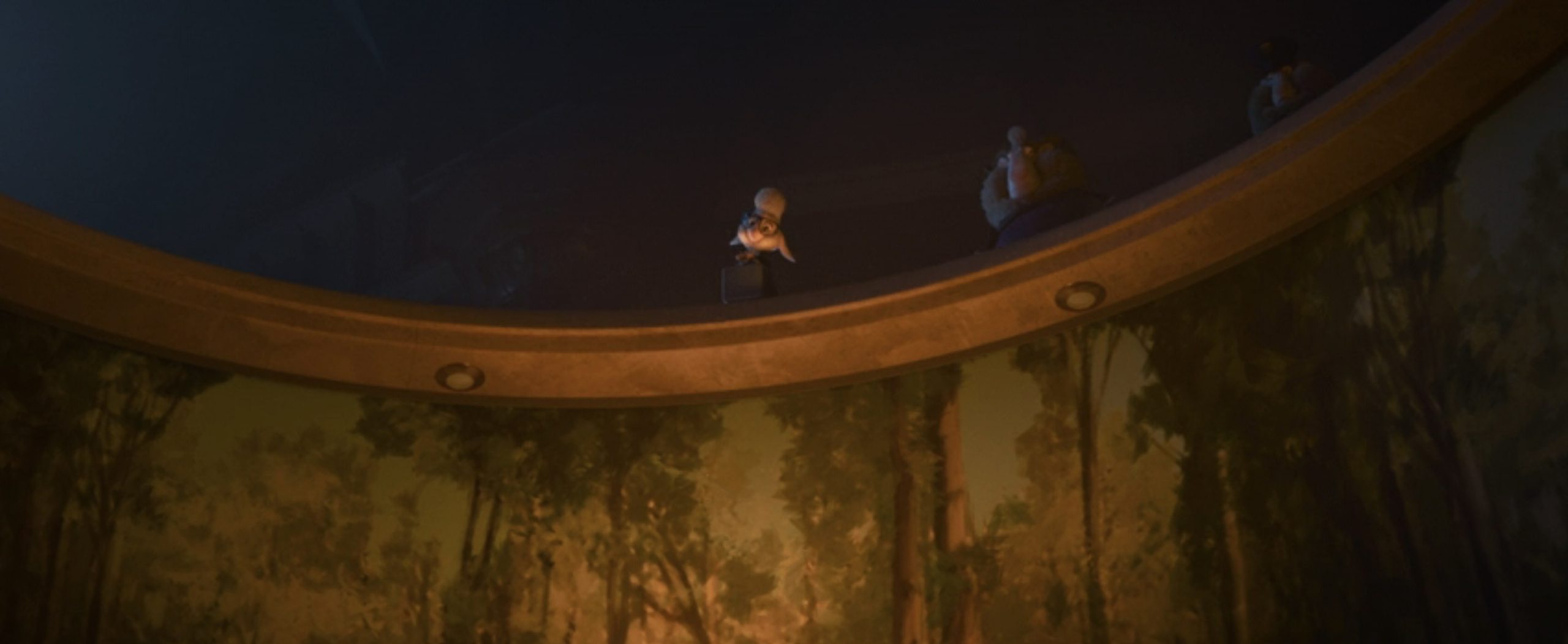
Zootopia’s (2016) hidden villain, the sheep Bellwether (and the first woman on this list), is also portrayed differently when her involvement in the conflict is revealed: She is immediately and consistently filmed from a low angle, her general behaviour becomes more assertive and self-assured, and her voice, while still relatively high-pitched becomes less dynamic and slightly lower-pitched (Figure 10). A very low pitch would likely strike the audience as confusing and “off” since Bellwether is a small sheep and pitch is naturally linked to size with higher pitch frequencies being produced by smaller vocal organs (Crochiquia et al. 2022; Ladefoged and Johnson 2011, 212).
The power of the voice
The voice is an important tool for characterisation (Knudsen 2026), and linguistic researchers have shown that the voice, on its own, carries the means to alter the perception of a speaker.
Using dialogue from four characters from the Brazilian Portuguese dubbing of Zootopia, Crochiquia et al. (2022) found that participants perceived the voices differently on parameters such as age, size, and personality.
For Bellwether, the sheep that is revealed as the villain of the movie, the researchers created two different sets of dialogue: One from before the reveal and one from after the reveal. Participants rated both dialogue sets as belonging to a “Small, Young” speaker, but whereas the pre-reveal dialogue was perceived as “Lively” and “Pleasant” and belonging to a “Happy, Kind, Charming” speaker, the post-reveal dialogue was still “Rather Lively”, but “Not Pleasant”, and the speaker was evaluated as “Rather Tough, Rather Aggressive, Not Charming” (Crochiquia et al. 2022, 567). This shows that not only is the voice used to form opinions about a speaker, but a speaker can also change their voice to convey information about their inner character.
It is difficult to tease apart the relative importance of background music, camera angles, behaviour, facial expressions, and voice when it comes to an audience’s perception of a character, as these elements always co-occur in movies.
As shown in this article, this is also the case when the audience is required to change their perception of a character because they are revealed as a villain. In these cases, change is almost never limited to a single element. Instead, a turn towards evil is marked by changes to the voice, posture, facial expression, music, and camera angles. While often subtle, these alterations are very much present and follow a pattern.When a character takes a turn towards evil, their posture becomes more domineering, the background music intensifies, and their facial expression turns stormy and dangerous. Likewise, their pitch and the camera angle are lowered, resulting in a character seen from below speaking with a deeper and often less dynamic voice than before.

Facts
Films
- Doctor Who: The Star Beast (2023), dir. Rachel Talalay.
- Frozen (2013), dir. Chris Buck and Jennifer Lee.
- Glass Onion: A Knives Out Mystery (2022), dir. Rian Johnson.
- Harry Potter and the Philosopher’s Stone (2001), dir. Chris Columbus.
- Scream (1996), dir. Wes Craven.
- Star Wars: Episode IV – A New Hope (1977), dir. George Lucas.
- Star Wars: Episode V – The Empire Strikes Back (1980), dir. Irvin Kershner.
- Stranger Things (2016-2025), created by Matt Duffer and Ross Duffer.
- Zootopia (2016), dir. Byron Howard, Rich Moore, and Jared Bush.
Literature
- Boyd, Zac, and Míša Hejná. 2025. “The ‘Critical Role’ of voice quality in Dungeons & Dragons: a case study of non-player characters voiced by Matthew Mercer.” Language in Society: 1-26.
- Clasen, Mathias. 2012. Monstre. 1 ed. Vol. 3.Tænkepauser. Aarhus: Aarhus University Press.
- Clasen, Mathias. 2017. Why horror seduces. New York, NY: Oxford University Press.
- Crochiquia, Alice, Anders Eriksson, Plinio A. Barbosa, and Sandra Madureira. 2022. “A perceptual and acoustic study of dubbed voices in an animated film.” Speech Prosody 2022, Lisbon, Portugal.
- Kjeldgaard-Christiansen, Jens, Zac Boyd, Míša Hejná, and Mark Eaton. 2025. “Good and Evil in the Voices of Fictional Characters: A Perception Study.” Journal of Language and Popular Culture: Online-first articles: 1-28.
- Kjeldgaard‐Christiansen, Jens. 2018. “Social Signals and Antisocial Essences: The Function of Evil Laughter in Popular Culture.” Journal of popular culture 51 (5): 1214-1233.
- Knudsen, Freja Hovgaard. 2026. “The voice of an angel – or a devil: How linguistic information helps the audience decode a character.” 16:9 filmtidsskrift.
- Ladefoged, Peter, and Keith Johnson. 2011. A Course in Phonetics. Sixth Edition ed.: Wadsworth, Cengage Learning.
- Ranganath, Rajesh, Dan Jurafsky, and Daniel A. McFarland. 2013. “Detecting friendly, flirtatious, awkward, and assertive speech in speed-dates.” Computer Speech & Language 27 (1): 89-115.
- Saint-Georges, Catherine, Mohamed Chetouani, Raquel Cassel, Fabio Apicella, Ammar Mahdhaoui, Filippo Muratori, Marie-Christine Laznik, and David Cohen. 2013. “Motherese in Interaction: At the Cross-Road of Emotion and Cognition? (A Systematic Review).” PloS one 8 (10): e78103.
- Spotlight on Film 2018. “Mirrors in Films: Duality, Secrets and Revelations, and the Passage to the Otherworld.” Spotlight on Film. Accessed 19.05.2026.